Corporate systems
ISO 9001 / ISO 45001 style management systems—if held—apply to named legal entities and scopes. Request issuer, locations and validity dates.
Map mobile-robot practice, scanner fields, risk reduction hierarchy and document ownership without converting standards lists into unexplained certificate logos. Seegrid treats fleet safety as an evidence chain that operations, EHS and controls reviewers can inspect together.
The focus remains machine risk, aisle interactions, functional safety ownership and the validation packets that close a Seegrid Safety & Compliance review before capital decisions harden around incomplete assumptions.
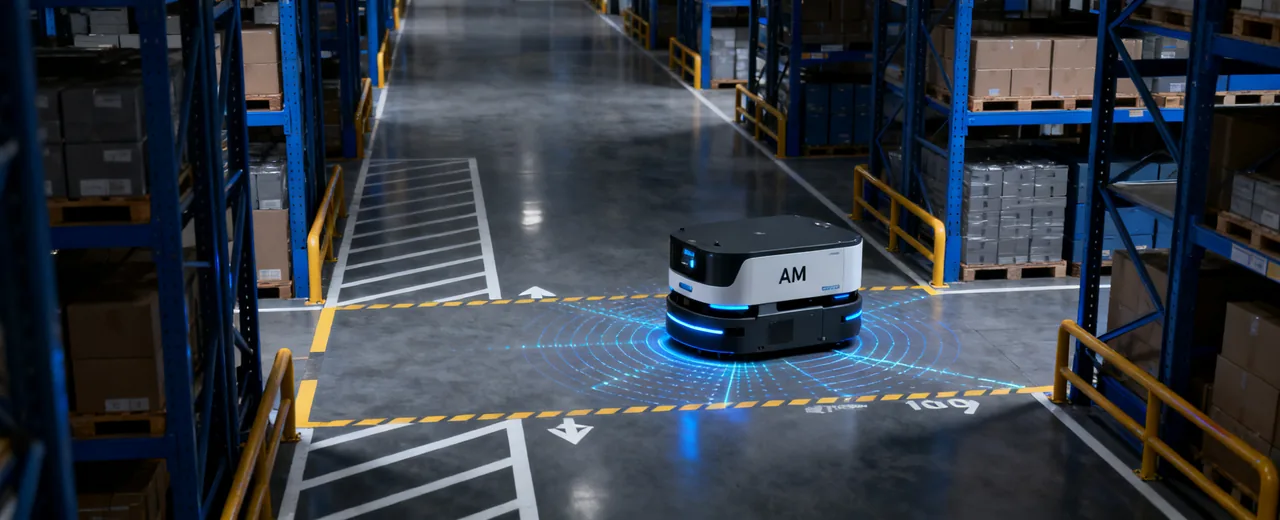
Seegrid reviewers keep management-system certificates, machine design references and site jurisdiction rules in different evidence classes so a framework mention cannot be mistaken for a model-specific certificate.
ISO 9001 / ISO 45001 style management systems—if held—apply to named legal entities and scopes. Request issuer, locations and validity dates.
ISO 12100 risk assessment and reduction principles inform design reviews. Mention is not a product certificate claim for a specific model.
ISO 3691-4 style references may inform AGV/AMR safety functions. The applicable edition, clause and responsible party must be confirmed for the delivered configuration.
ISO 13849-1 style references may inform safety-related parts of control systems—ownership of PL/SIL claims must still be named per function.
Load unit, mass, dimensions, attachment envelope and the residual capacity or tip-risk conclusion for the working task.
Crossings, mirrors, one-way rules, fleet zone maps and owners for temporary route changes.
Representative missions, braking and stop observations, warning verification, isolation authority and retest triggers.
Daily checks, defect quarantine rules, critical spares and escalation contacts tied to robot identity.
Seegrid Safety & Compliance work treats machine safety, aisle interactions, functional safety boundaries and validation documents as a single evidence chain. We do not present generated planning ranges as certified facts, and we do not display certificate logos without a named issuer, scope and current document for the exact entity and configuration under review.
Goals for a typical project review include: (1) a written payload and traffic basis for the governing mission; (2) a fleet plan that names pedestrian and robot interaction rules; (3) commissioning tasks that exercise both normal and recoverable abnormal states; (4) maintenance ownership that can quarantine a defective unit without improvised workarounds. Progress is measured by closed document items, not by slogan completion.
Scanner fields, fleet traffic rules, charging and robot-to-control exceptions become part of the same hierarchy. Where conventional trucks share the aisle, workplace practice and manufacturer instructions still require operator authorization and inspection discipline. In both cases, the Seegrid page exists to make evidence boundaries explicit before capital decisions harden around incomplete assumptions.
Rated load (kg) with load center; aisle / clear width (mm); system throughput (units/hour or order lines/hour) for a 60–120 minute peak window; interface cycle time (s) for PLC/WCS/FMS handshakes; system availability (%) with mean time to repair stated in hours.
ISO 12100:2010, ISO 13849-1:2015 and ISO 3691-4:2020 are cited as review frameworks. Edition years support document control; they are not product certificates for a named Seegrid model unless issuer, scope and validity are supplied.
Provide free application-engineer review of mission scripts, optional factory or site witness for FAT/SAT, and a written exception-injection case (blocked destination, message timeout, lost identity) with timestamps and restart authority.
Compare fixed automation vs flexible robotics, density vs selectivity, and centralized vs modular orchestration without naming competitors. Freeze pedestrian interaction rules and performance level (PL) ownership before capital release.
Provide load data, aisle geometry, pedestrian density, charging option, known standards of interest and any WMS/WCS interfaces. We will help separate design inputs from items that still need site validation for Seegrid fleets.