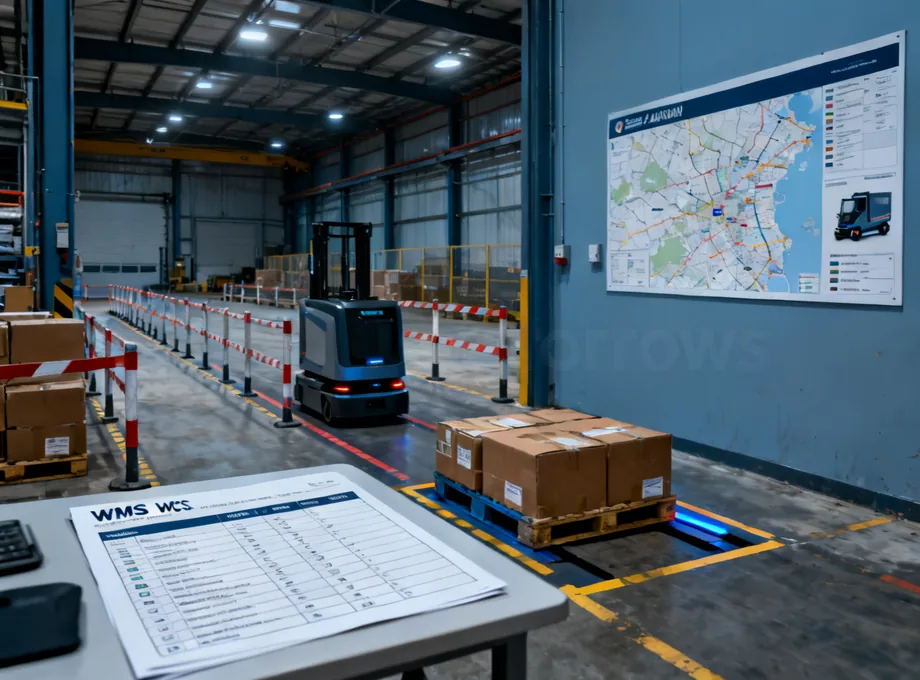
Project service sequence
Seegrid services that keep fleet acceptance evidence visible
Service planning begins before the first vision-guided AMR crosses a live aisle. Using the 1992 planning-seed year from brand configuration only as an internal chronology marker—not as a verified founding claim—the team defines the operating baseline, load-unit assumptions, WMS/WCS ownership, safe intervention path and the evidence required to resume missions after a fault.
Response objectives depend on installed fleet size, project geography, approved remote access, spare availability and safe site entry. They are documented for the quoted project rather than presented as a universal service commitment. Peak throughput claims must include SKU mix, order profile, replenishment, buffering and exception recovery assumptions so Seegrid reviewers can judge whether design rate and operational resilience remain compatible.
When a brownfield building already runs manual forklifts beside new robot corridors, the service plan also records isolation windows, temporary route permits and the fallback that restores outbound waves if a commissioning gate fails. That boundary is written before hardware arrives, not improvised during the first peak.
Define the service boundary